Dookie Trip

A little while ago my whole DVM1 class packed up and went out to the University of Melbourne’s Dookie campus as part of our Animal Health and Production Systems class. I was excited, because who doesn’t like a couple days without lectures?

In the morning we caught the bus from our regular campus bright and early and began a drive out into the Australian country side. As we move from spring into summer, the rainfall has decreased and the pastures are not growing as fast and are beginning to dry up and turn yellow. Our first stop was at Chatswood, a thoroughbred horse stud.  A stud farm is a farm that focuses on breeding of animals.

The horse racing industry is huge in AUS, especially in Melbourne. High class and very famous races like the Melbourne Cup take place only a few minutes from my house! Unfortunately the Melbourne Cup is on one of the same days as my final exams this year so it doesn’t look like I’ll be going.

The farm was built on 1000 acres and is very impressive looking. We talked a bit about the process behind bringing mares to be served by 1 of the 3 stallions on the property and everything that process included. Thoroughbreds are only allowed to have natural breedings  (instead of artificial insemination) and this brings along a new set of challenges and things to look out for. My group was lucky because we got to watch some vet checks on the horses, each horse would come in for an ultrasound to look for follicles on her ovaries. If the follicles are a certain size the vet will say she is ready for breeding soon. The ultrasound is also used to detect if the horses are pregnant and if they have twins. It is very hard for twins to be carried to term in horses and so if 2 embryos are detected one of them will need to be terminated. We also got to watch a Caslick procedure being preformed and undone (this is a very common and minor surgical procedure that equine vets will do).

Our group then went to the breeding area; it is very nice, clean, quiet, and covered. Here we watched a teaser stallion come in and prep a mare for her breeding. I then quietly peaked through a hole in the gate to watch Reward for Effort (one of Chatswood’s best stallions) breed the mare. Thoroughbred breeding on a stud is very expensive ($11 000 for a service) and an important procedure that can be very dangerous for the handlers.

The foaling area has a 24 hour watch over all of the paddocks as each foaling is assisted. After each foal is born a blood sample is taken and assessed.

Next we went to Kennedy Creek, which was our professor’s own polled Dorset farm. I found it actually really cool to create a connection between someone we are learning A LOT from in lecture and his actual life experience in agriculture. Dorset sheep are used for meat but not wool. This does not mean that they do not need to be sheared! The wool from these sheep would only generate an income of 5% or less for the farm.
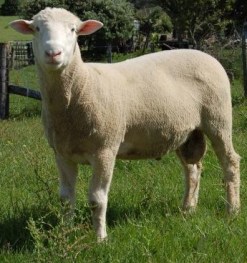
Poll_dorset

While on farm our prof (who is also a vet) identified a sick sheep. The animal was moved out of the hot sun to recover. The sheep was likely sick with either thiamine deficiency or pulpy kidney (no way to know unless diagnostic tests were done). While we were on farm the sheep began to improve and look better. Talking about this individual sick sheep was a great learning opportunity on the differences between single animals and herd health.

The second day started at the sheep farm on Dookie Campus where we were able to assist with the marking of lambs. Marking included putting elastic on the tails of all sheep (tail docking) and testicles of male sheep (castration), vaccination (for Clostridial diseases), applying fly strike spray, and applying an ear tag for identification.
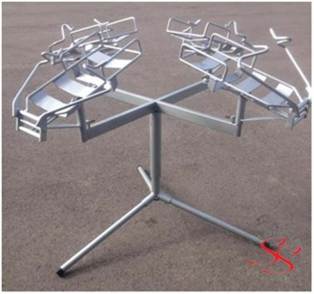
lambs-cradle-w356h334-wfqsqpqtontj

This is a cradle, used for restraining lambs during marking.

After we were finished marking the lambs we went inside the shed to look at the rams. We discussed important things to assess at a ram sale (teeth, toes, temperament, testicles, and skin). We also spoke about crutching and muesling and the advantages and disadvantages of each husbandry practice. I thought it was interesting that Dookie is one of the only farms in VIC that does not muels their sheep; the practice was supposed to be banned in AUS around 2 years ago but fell through because of the fly strike problems. We practiced catching sheep and how to safely tip them over so we can look at them (always fun!).

Our last stop was to the dairy calves and then the Dookie Campus robotic dairy! Here is some coverage from when the dairy opened:

This is the same dairy we visited during my first week of vet school. Cows can be milked whenever they please, the robot will take a sample from each cow to test for infection and milk quality. The robot is able to keep track of all cows treated with medications and what the withdrawal periods. Detecting when cows are ready to breed is very complicated in the dairy industry—the robots can help with this too!! The robots will keep track of all the steps each cow takes (each cow wears a pedometer) and the amount of rumination/chewing to create a graph that will give a good indication of when the cow is in heat (ready to breed)!! How cool is it to see science and farming come together like this?!

I really enjoyed getting out of the city for a couple of days and seeing these high quality and top class farms was very interesting! 🙂
Holidays away from Home

Being away from home on holidays and important events hasn’t been too terrible so far; but I do miss my family, friends, and the yearly traditions.

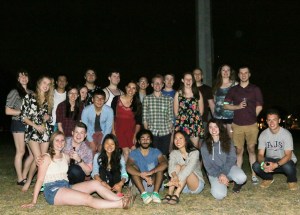
My birthday is at the beginning of October and I never would have imagined turning 23 in Melbourne and celebrating without some of my closest friends. But the people I’ve met in the last 8 months made this day great! My roommate and I had a combined party in a park on Saturday night, we made s’mores on the BBQ and enjoyed the warm weather!

Most of the gang that came out to the park.

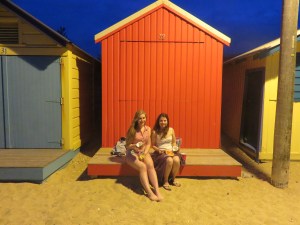
On my actual birthday I received birthday wishes from friends all over the world and a few presents before going to Brighton Beach to watch the sunset.

Eating coconuts & papaya in front of the boxes at Brighton!

My birthday and Thanksgiving usually go hand-in-hand. Australia doesn’t celebrate it…but this year:

I’ve never had a funnier Thanksgiving in my life.

This weekend was Thanksgiving at home in Canada, so instead of staying in the library for even longer and eating my warm sushi we decided to have our own holiday.

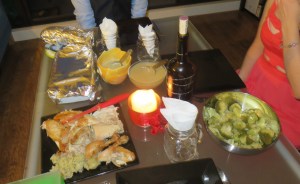
We put the table in the middle of the kitchen with 1 broken chair, 1 footstool, and 1 hot pink desk chair. Food was served in several odd dishes and 1 candle holder. Wine glasses were mason jars. Serving utensils were measuring cups; this ensured that everyone had specifically 1/2 cup of gravy!

Our feast!

Dinner music was classical and added an epic and building undertone to all conversations. By the time pie and tea came around we had completely run out of utensils and mugs. I ate my pie with a tablespoon, the roommate ate her’s with a 1/2 tablespoon and her boyfriend drank his tea out of a milk pot.

Apple pie and tea! You can see that our newest family member, Gem the fish, joined the Thanksgiving celebration.

It was amazing and I couldn’t have eaten one half tablespoon more!

Crazy faces who are feeling full and thankful!

I am so thankful and amazingly blessed to be in vet school (and almost done my first year!). I also have a whole ton of new friends and experiences and life goals that I’ve accumulated! But I can’t wait to come home and have a white Christmas…

Volunteering at the Royal Melbourne Show

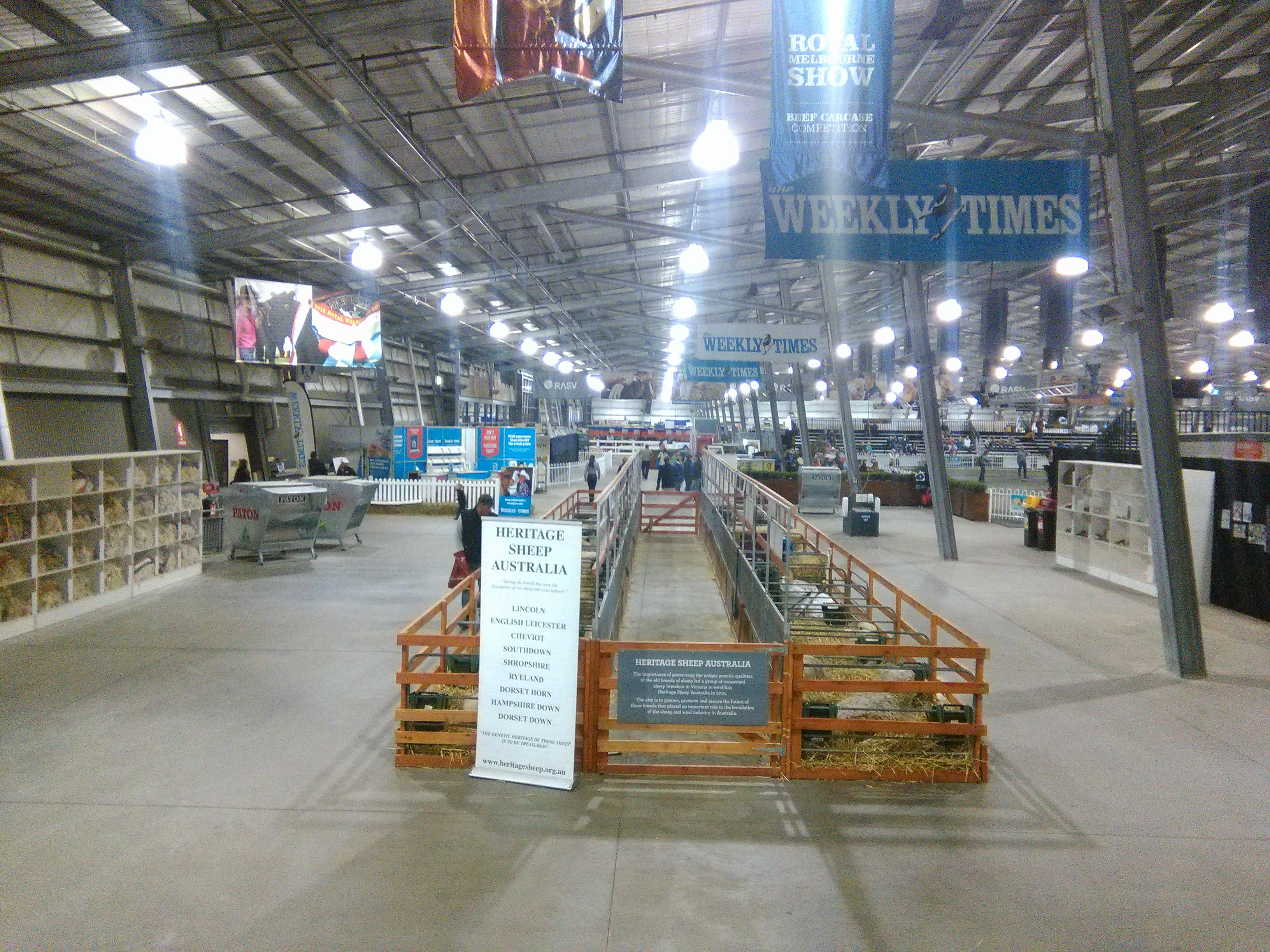
Some of my absolute favorite memories in life have been made while interning or volunteering. I absolutely love it and this weekend I had the opportunity to volunteer at the Royal Melbourne Show! The RMS is like a huge carnival with trade shows and games and food and lots of different pavilions. I signed up to work in the Heritage Sheep Exhibit for 2 days.

WP_20150928_093

The sheep pens all cleaned up and closed down for the night

My time was spent making sure the sheep had enough feed and water all day and were not being stressed or abused by any onlookers. I was also able to answer the questions that members of the public had regarding the exhibit, breeds, and sheep farming in general. Most people were quite excited to hear my accent and asked about my background in agriculture in Canada.

My supervisor and I were required to keep the area neat and tidy and free of all escaped bits of straw—this included some frustrating sweeping between the legs of thousands of people!

All of the sheep came from different breeders and so they were not allowed to intermingle. The Cheviots were very sweet and appreciated a scratch behind the ears. The two Shropshire lambs required bottle feeding a couple times a day; their names were Pickles and Beeper.

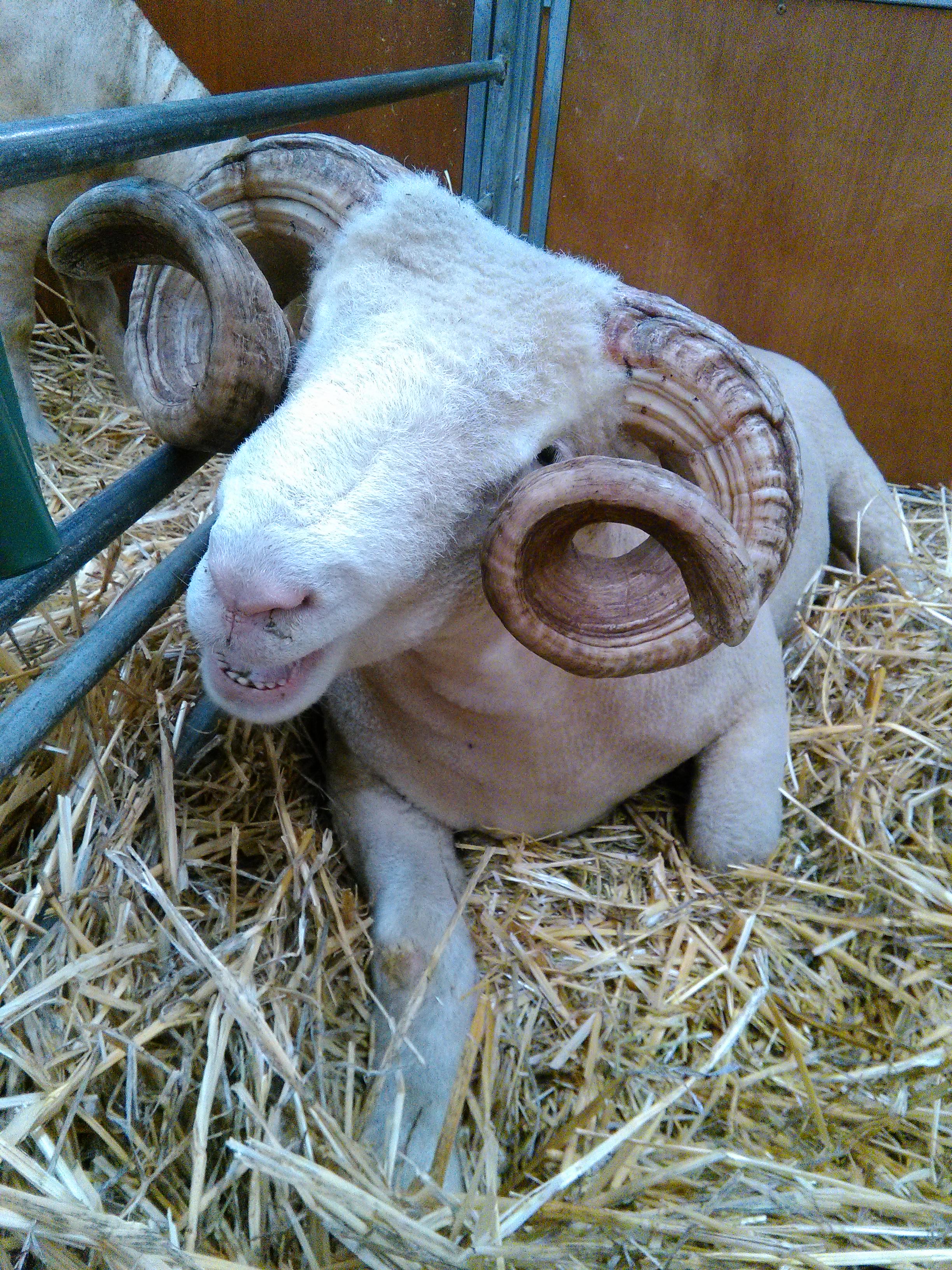
WP_20150928_006

Meet a Dorset Horn with a stubborn personality!

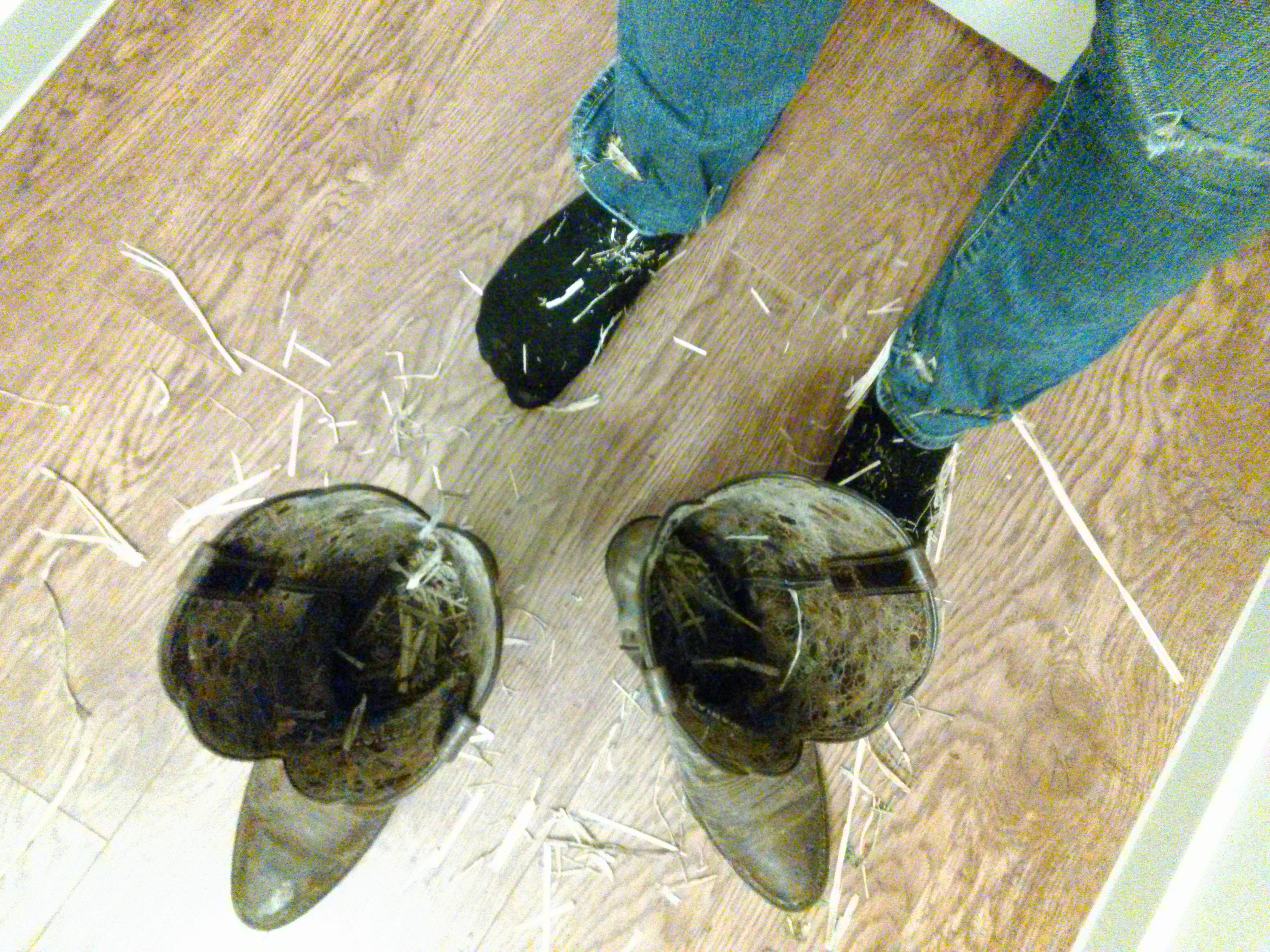
At the end of my second shift we had to muck out all the stalls. For those who don’t know, this means that we had to take a pitch fork and pick up and remove all the heavy soiled straw from the pens and sweep it out into large piles to be removed. We then had to break up new bales of fresh straw and lay this down as clean bedding in each pen before the sheep are allowed their supper. This is hard work, especially when you have to watch the sheep don’t escape! By the time I got home that night my boots had been stuffed FULL of straw (which promptly exploded all over the hall of my apartment)!

WP_20150927_006

Good thing my vacuum cleaner is broken!

I did hear a few rumors that the Heritage Sheep Exhibit might be on its last legs and be non-existent in a few years. This is heartbreaking news to hear as ag education is something very dear to my heart. I think it is SO important for society to be exposed to livestock, farming, food, agriculture, etc. People need to be educated on where their food comes from and how it is produced. Amazing shows like this provide a fantastic learning opportunity for curious people to learn more about something they are unfamiliar with. Since the wool industry is massive in Australia I think it is very important that exhibits such as this one remain in place!

I had a fabulous experience volunteering in the sheep exhibit; I was able to pick my supervisor’s brain, get some hands on experience with sheep, practice my agriculture/public engagement, and do some networking. I love making connections and I’ve met some very kind and helpful people this weekend. I hope to be back working at the show next year.

I can blog and study right?

I’m writing this blog post as a half procrastination-half studying tool because I really like theriogenology and reproductive technologies (and I may have a quiz tomorrow on this stuff…). They are relatively new and there is so much advancement and growth in that field! And so much more work to be done there as well…

Here are 3 of reproductive technologies that can be used for genetic improvement.

Artificial Insemination (AI) is a reproductive technology where semen is harvested from male animals and stored in semen straws that can then be deposited into chosen females. It is used to increase male selection and can therefore potentially increase the accuracy of the Estimated Breeding Values (EBVs). Semen can be sourced from all over the world and can potentially increase the effective population size (amount of genetically unrelated animals in a population). However, using a dairy bull from the USA may not be a great choice for an AUS dairy farmer as environmental interactions may pop up! AI is not used as often in the beef industry because it is more costly and labour intensive. AI is too expensive to do on commercial sheep farms as the procedure is different, it involves surgical insemination of the females. However, sheep stud farmers may use AI as they are selling the offspring for a lot more money (thus more cost effective). The benefits of using AI in your industry include:

  1. Increases the accuracy of EBVs and male selection
  2. Allows commercial breeders to access genetic information that previously would have been too expensive (and used only at a stud level)
  3. Allows great genetics to be rapidly spread throughout a population (because many semen straws can be made from one male)
  4. Technically forms a ‘world flock/herd’ of animals

Multiple Ovulation Embryo Transfer (MOET) is used to increase female selection and can therefore potentially increase the accuracy of the EBVs. However, this is a very expensive procedure as it involves taking a superior female animal, using hormones to get her to produce more eggs and then harvesting the eggs. MOET allows the female genetics to be spread farther/faster into the population. MOET is best used in species who usually only produce one egg at a time like cows.

Inbreeding can be a big problem with MOET, so farmers need to develop a good breeding scheme/plan to avoid this. It is best to use females with good genetics and semen from males with good genetics (as opposed to fresh semen and females that harvest/flush well).

This leads to a concept which I find exciting (and ethically interesting!) which is called Juvenile In Vitro Embryo Transfer (JIVET). Since all females are born with the total number of eggs they need in life, these can technically be harvested at a very young age (juvenile). These harvested eggs can then be in vitro fertilized and develop into offspring. This reduces the generation interval and increases selection intensity. There are current issues with this reproductive technology that have not been worked out yet—and so it is not common.

I apologize if some of the terms and concepts were a bit too confusing for some of my non-vet friends; however if you are interested in food or wool production this is a vital part of the industry. Feel free to pose any queries you might have and I’ll try  my best to answer 🙂

Feb 060

At work at my old university dairy barn.